FCS-PH-0024
Photography Wing · Exhibit No. 24
Echoes of the Coast
Every abandoned home was once someone's everyday life.
Echoes of the Coast
FCS-PH-0024
Permanent Collection
Northern coast of Puerto Rico
September 2014
About the Work
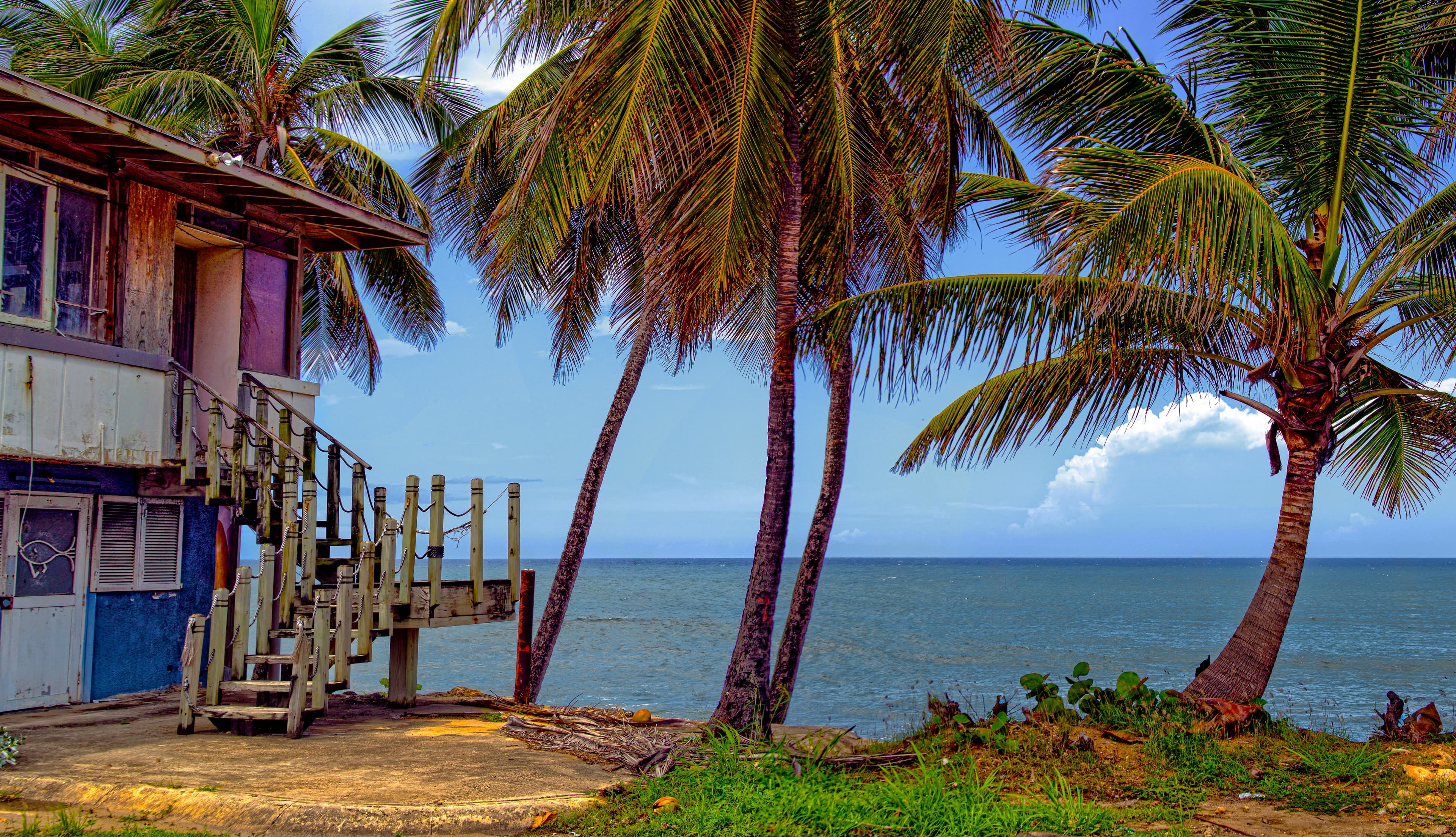
An abandoned coastal home stands between tropical beauty and the patient force of the sea, becoming a meditation on memory, displacement, vulnerability, and everything once lived within its walls.
The Artist
This photograph was created in September 2014 while driving from San Juan toward Aguada.
As the highway moved closer to the coast, I noticed a road leading toward the sea and decided to take the detour.
After parking, I found this weathered house standing only a short distance from the Atlantic.
I never learned who owned it or how long they lived there.
I imagined the families who might have watched sunrises and sunsets from its porch, listening to the waves only a few steps away.
The house appeared abandoned and vulnerable, as though the sea were patiently preparing to reclaim it.
I could not help imagining the heartbreak involved in leaving such a place.
Looking back, I realize I was not photographing an abandoned building.
I was photographing everything that had once made it a home.
The Curator
Coastlines are places of extraordinary beauty and extraordinary vulnerability.
Echoes of the Coast reflects on the tension between the enduring appeal of home and the forces that make remaining impossible.
The weathered building becomes a broader symbol of families affected by storms, economic hardship, migration, and political or financial conditions beyond their control.
Curatorially, Echoes of the Coast is strongest when read through the distance between an event and its later remembrance. The composition does not require a dramatic event to justify its place in the collection; its meaning develops through relationships inside the frame—distance, scale, structure, atmosphere, and the distribution of visual weight. That restraint is important. It allows the photograph to carry the theme of memory through form as well as through biography, giving the work an independent visual life while remaining connected to the artist’s experience.
Story Behind the Photograph
During a drive along Puerto Rico's northern coast, the artist left the highway after noticing a smaller road close to the sea.
There he discovered an abandoned home facing the Atlantic.
Its setting remained beautiful, but its condition suggested a more difficult history.
The artist imagined the ordinary family life once contained within the building and the circumstances that may have forced its occupants to leave.
The photograph became a meditation on loss through circumstance rather than choice.
The photograph’s significance did not end when the shutter closed. What was encountered in Northern coast of Puerto Rico later became part of a larger personal record, and the surviving frame now connects the circumstances of the exposure with the perspective gained afterward. That distinction matters: the image documents what was physically present, while the story records what the moment came to mean. Keeping those two forms of evidence together—without confusing one for the other—is central to the way this work is preserved.
Reflection
Every home begins as someone's dream.
Every empty home leaves behind someone's story.
The walls may weather.
The paint may fade.
The sea may continue its patient work.
Yet the echoes of laughter, conversation, and ordinary days remain.
Perhaps home is never only a place.
Perhaps it is the life we leave within it.
The photograph ultimately raises a question about what the frame retains after lived detail begins to recede. A camera can hold the appearance of a moment, but it cannot hold the entire experience surrounding it. That limitation gives Echoes of the Coast much of its power. What is absent is not a flaw to be repaired; it is the space in which memory continues to work. The image remains fixed while the person returning to it does not.
The Museum
Preserved as the twenty-fourth accessioned photograph in the Francisco Colón Studio Photography Wing, Echoes of the Coast connects landscape with social memory and the fragile relationship between people and the places they love.
Within the Francisco Colón Studio Photography Wing, Echoes of the Coast is retained as part of the photograph as evidence that memory changes while the recorded scene remains. Its importance is therefore not measured only by subject matter or visual appeal. The work helps establish a recurring Studio principle: personal history can be preserved with emotional depth while the archive remains disciplined about the difference between what the photograph shows, what the artist remembers, and what later interpretation can responsibly infer.
Technical Information
- Capture Date
- September 2014
- Location
- Northern coast of Puerto Rico
- Route
- San Juan → Aguada
- Metadata Status
- Month, year, general location, route, and artist provenance preserved. Exact coordinates and equipment require verification.
- Supporting Documentation
- Original source photograph and artist provenance narrative preserved in the Francisco Colón Studio archive.
Collection Record
- Accession Number
- FCS-PH-0024
- Exhibit Number
- 24
- Exhibition
- Nature
- Status
- Permanent Collection
- Original Capture
- September 2014
- Studio Acquisition
- Francisco Colón Studio Photography Wing
- Artist
- Francisco Colón
- Copyright
- © Francisco Colón. All Rights Reserved.