FCS-PH-0015
Photography Wing · Exhibit No. 15
The Language of Tango
Before every performance, there is trust.
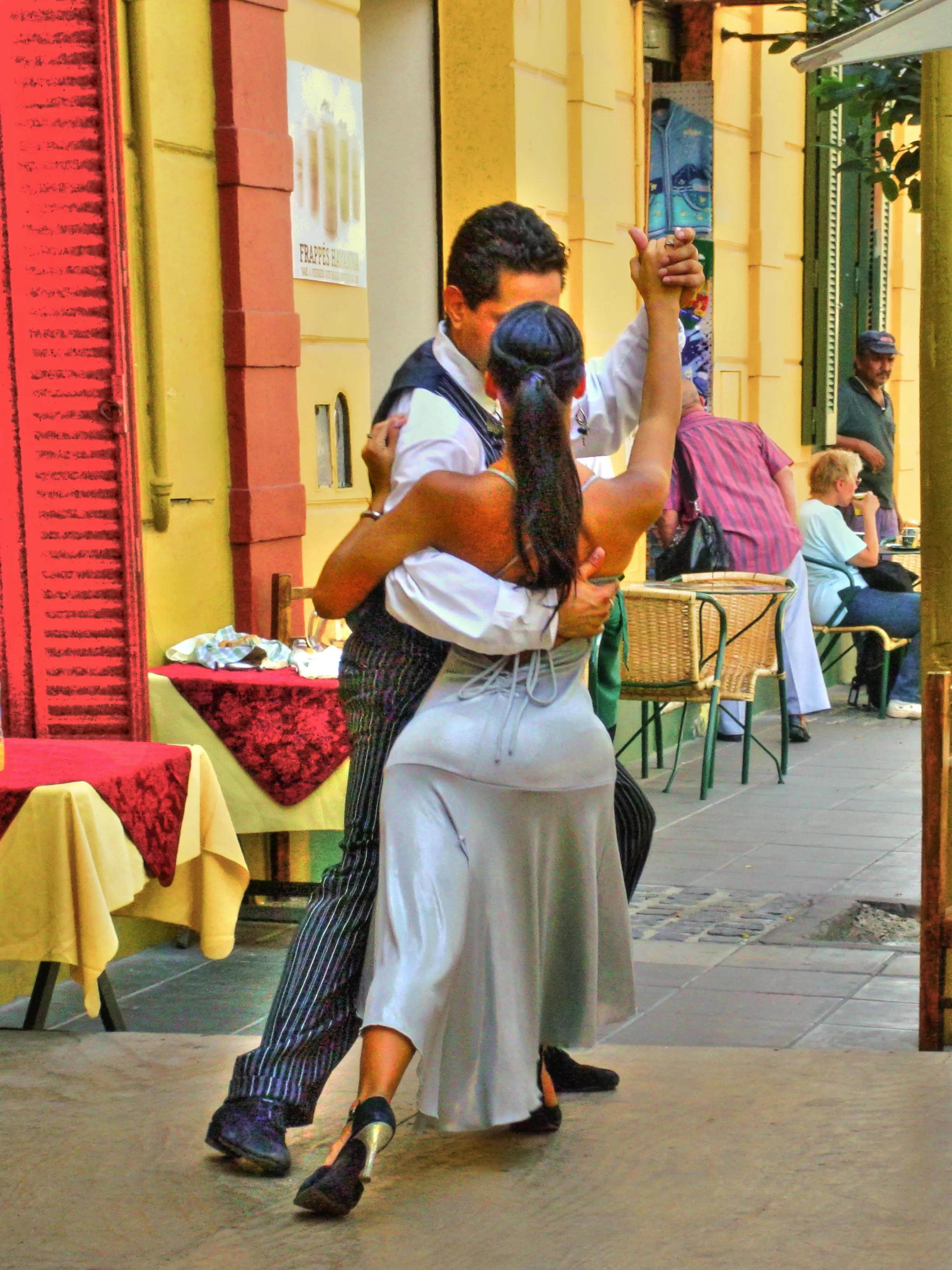
The Language of Tango
FCS-PH-0015
Permanent Collection
Buenos Aires, Argentina
Approximately 2009
About the Work
A young tango performer receives quiet assistance moments before performing. Captured without interruption, the photograph reflects on trust, preparation, and the unspoken language shared between artists before the music begins.
The Artist
While walking through Buenos Aires, I noticed a young tango performer being helped by a woman as he prepared for a public performance.
It was a quiet and unguarded moment.
They were not yet performing for an audience.
They were simply preparing together.
I chose not to approach them or interrupt what was happening. Instead, I photographed the scene from where I stood, allowing the moment to remain exactly as I found it.
Looking back, I realize I was not photographing tango itself.
I was photographing the trust that makes the performance possible.
What keeps bringing me back to The Language of Tango is the feeling that the photograph contains more than the subject I first noticed. With time, I began to understand it through the quiet visual evidence of people or places being linked. I do not want the image to explain the memory for the viewer or to pretend that I remember more than I do. I want it to preserve the part that remains true: where I stood, what caught my attention, and why the frame still asks me to look again.
The Curator
Tango is often remembered through dramatic movement, expressive music, and public performance.
The Language of Tango looks elsewhere.
Rather than documenting the dance, the photograph preserves the quiet relationship that precedes it. The performers communicate through gesture, attention, and familiarity before a single step is taken.
The work reminds us that behind every public expression of artistry lies an unseen partnership built on preparation, trust, and mutual care.
Curatorially, The Language of Tango is strongest when read through relationships created by proximity, gesture, and shared space. The composition does not require a dramatic event to justify its place in the collection; its meaning develops through relationships inside the frame—distance, scale, structure, atmosphere, and the distribution of visual weight. That restraint is important. It allows the photograph to carry the theme of connection through form as well as through biography, giving the work an independent visual life while remaining connected to the artist’s experience.
Story Behind the Photograph
This photograph was created in Buenos Aires around 2009.
Before a public tango performance began, the artist noticed a young performer receiving assistance from a woman nearby.
The interaction lasted only a short time.
There was no music.
No applause.
No formal audience.
The photographer chose not to approach or direct the pair because preserving the natural condition of the moment mattered more than obtaining a closer or more controlled image.
Whether the two were partners in dance, life, or both remains unknown.
The photograph preserves what could be seen without claiming to explain what belonged only to them.
The photograph’s significance did not end when the shutter closed. What was encountered in Buenos Aires later became part of a larger personal record, and the surviving frame now connects the circumstances of the exposure with the perspective gained afterward. That distinction matters: the image documents what was physically present, while the story records what the moment came to mean. Keeping those two forms of evidence together—without confusing one for the other—is central to the way this work is preserved.
Reflection
Some conversations never require words.
A careful gesture.
A shared understanding.
A quiet adjustment before stepping into view.
Trust often reveals itself in the smallest acts of care.
Long before the music begins.
The photograph ultimately raises a question about the quiet visual evidence of people or places being linked. A camera can hold the appearance of a moment, but it cannot hold the entire experience surrounding it. That limitation gives The Language of Tango much of its power. What is absent is not a flaw to be repaired; it is the space in which memory continues to work. The image remains fixed while the person returning to it does not.
The Museum
Preserved as the fifteenth accessioned photograph in the Francisco Colón Studio Photography Wing, The Language of Tango expands the collection's exploration of human connection through the unseen preparation behind public performance.
The work honors the trust and collaboration that allow artistic expression to emerge naturally before an audience.
Within the Francisco Colón Studio Photography Wing, The Language of Tango is retained as part of the archive as a record of relationships rather than isolated subjects. Its importance is therefore not measured only by subject matter or visual appeal. The work helps establish a recurring Studio principle: personal history can be preserved with emotional depth while the archive remains disciplined about the difference between what the photograph shows, what the artist remembers, and what later interpretation can responsibly infer.
Technical Information
- Capture Date
- Approximately 2009
- Location
- Buenos Aires, Argentina
- Metadata Status
- Approximate year, city, and artist provenance preserved. Exact capture date, neighborhood, camera, and lens information require verification from the original file.
- Supporting Documentation
- Original source photograph and artist provenance narrative preserved in the Francisco Colón Studio archive.
Collection Record
- Accession Number
- FCS-PH-0015
- Exhibit Number
- 15
- Exhibition
- People
- Status
- Permanent Collection
- Original Capture
- Approximately 2009
- Studio Acquisition
- Francisco Colón Studio Photography Wing
- Artist
- Francisco Colón
- Copyright
- © Francisco Colón. All Rights Reserved.