FCS-PH-0106
Photography Wing · Exhibit No. 106
The Moon That Followed Us
The places changed, but it was always there.
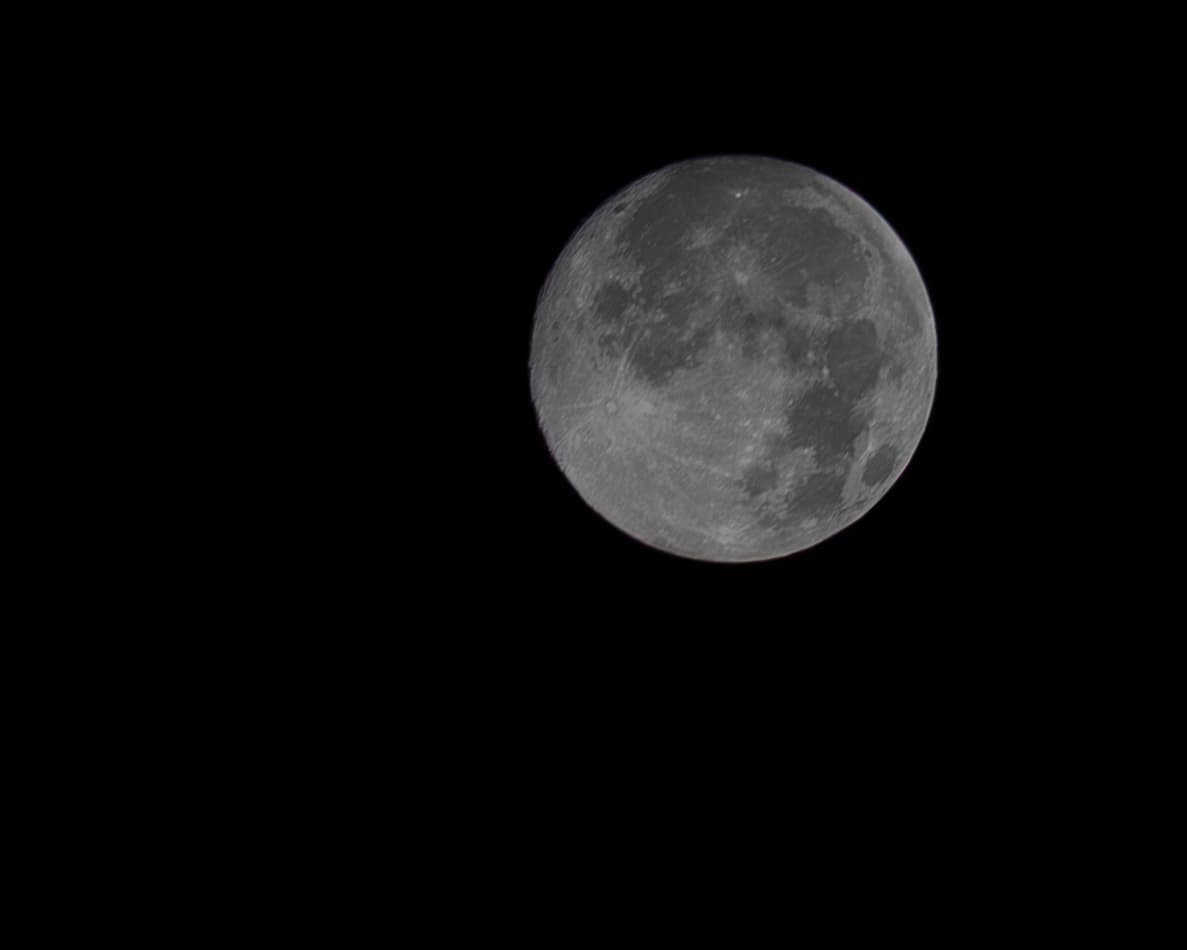
The Moon That Followed Us
FCS-PH-0106
Permanent Collection
Mexico; precise location unknown
Sunday, November 18, 2018
About the Work
Photographed handheld somewhere in Mexico, The Moon That Followed Us transforms a familiar celestial subject into a vessel for personal memory. As a child in Paterson, New Jersey, Francisco Colón ran with his brother and cousins believing the Moon was following them. Decades later, it became connected to Ana Gabriel's song Luna, a lost love, and the woman with whom he would eventually travel the world—the experiences that helped inspire Fronteras y Ecos. The surrounding darkness expresses distance and solitude, while the Moon remains a quiet companion across childhood, love, travel, and time.
The Artist
I made this photograph somewhere in Mexico, although I no longer remember whether I was standing on the balcony of my apartment or walking to or from a photographic shoot. I photographed the Moon handheld, trying to remain as steady as possible and preserve as much detail as I could. The result is not perfectly sharp, but what it returned to me matters more than technical perfection.
When I was a poor young boy growing up in Paterson, my brother, my cousins, and I would run through the streets and say that the Moon was following us. No matter how quickly we moved or where we went, we could look up and find it still there.
In 1997, I often listened to Ana Gabriel's Luna. At that time, the only woman I could think about was the woman who had broken up with me. Years later, she would become the woman with whom I traveled across countries and continents. Those journeys, the borders we crossed, and the memories that remained eventually helped give rise to the title Fronteras y Ecos.
Perhaps that is why I have photographed the Moon so many times. It has followed me from Paterson to Mexico and through different periods of my life. I may not remember where I was standing when I made this particular photograph, but I remember the feeling of looking up and finding it there again.
The Curator
The Moon That Followed Us places the lunar body within the upper-right region of an almost entirely black field. The asymmetrical composition resists the static certainty of a centered astronomical record. Instead, the broad negative space creates a visual journey: the viewer crosses the darkness before arriving at the Moon.
The Moon is large enough to reveal variations across its surface, yet it remains surrounded by sufficient emptiness to communicate distance and isolation. Its slight softness records the physical conditions of its making. This was a handheld exposure at the extreme end of a telephoto lens, not an observatory image produced under controlled conditions.
That imperfection supports the work's emotional purpose. The photograph is less concerned with scientific description than with the human act of looking upward. The Moon appears not merely as an object in space, but as a familiar presence held within an immeasurable darkness.
Story Behind the Photograph
Francisco Colón made this photograph in Mexico on Sunday, November 18, 2018. The surviving metadata confirms the date and technical circumstances, but the precise location has not been recovered. Francisco does not remember whether he photographed the Moon from the balcony of his apartment or while walking to or returning from a photographic shoot.
Using a Canon EOS 5D Mark III with a Canon EF 28–300mm lens extended to 300mm, he made the exposure handheld at 1/125 second, f/13, and ISO 100. He attempted to hold the camera as steadily as possible, although the combination of the long focal length, modest shutter speed, and handheld technique introduced some softness.
The photograph later reopened memories extending far beyond Mexico. As children growing up in Paterson, New Jersey, Francisco, his brother, and their cousins would run while imagining that the Moon was following them. Because it remained visible wherever they moved, it became part of a childhood game and an early encounter with wonder.
Another association emerged from Ana Gabriel's song Luna, released in 1993 but personally significant to Francisco in 1997. During that period, he listened to the song while thinking about a woman who had ended their relationship. Years later, the two would travel together across the world. The borders crossed during those journeys and the memories that continued to resonate became part of the emotional foundation behind the album title Fronteras y Ecos.
The photograph therefore holds several periods at once: a childhood street in Paterson, a heartbreak remembered through music, journeys made across borders, and an uncertain evening somewhere in Mexico. The exact ground beneath the photographer has been forgotten. The presence above him has not.
Reflection
The Moon is among the most photographed subjects in human history. Millions of images describe its craters, phases, eclipses, colors, and position in the sky. Yet people do not truly see the same Moon.
One person sees a scientific body governing tides and marking time. Another sees a symbol of romance, distance, loneliness, or return. Songwriters ask it to carry messages to absent lovers. Children believe it follows them home. Travelers discover that even after crossing oceans and borders, they can look upward and recognize something unchanged.
Memory behaves in much the same way. It does not preserve every location, date, or circumstance with equal clarity. Sometimes the surrounding world disappears while one presence remains. Francisco cannot recover the exact place from which he made this photograph, but the Moon reconnects him to Paterson, to his brother and cousins, to a song heard during heartbreak, and to the woman with whom he would later travel.
The slight softness of the image becomes appropriate. Memory is rarely sharp from edge to edge. We forget where we were standing and what brought us outside, yet remember who occupied our thoughts when we looked up.
The Moon did not literally follow those children through Paterson. Nevertheless, across decades, countries, love, separation, and artistic creation, it has remained. Perhaps companionship is sometimes nothing more complicated than discovering that something familiar is still there.
The Museum
Preserved in the Francisco Colón Studio Photography Wing as a study of celestial observation, personal memory, solitude, and continuity across time. The work demonstrates how a frequently photographed subject can acquire distinct meaning through the life of the person standing beneath it.
Within the collection, The Moon That Followed Us connects photography with music and autobiographical memory. Its associations with Ana Gabriel's Luna and Francisco's album Fronteras y Ecos extend the photograph beyond a single medium, showing how an image, a song, and a remembered relationship can continue echoing through one another.
The work also supports the central principle of Because I Looked. Its significance lies not in offering the most technically perfect description of the Moon, but in preserving what returned to the artist because he looked up.
Technical Information
- Camera
- Canon EOS 5D Mark III
- Lens
- Canon EF 28–300mm f/3.5–5.6L IS USM
- Focal Length
- 300 mm
- Capture Date
- Sunday, November 18, 2018
- Capture Time
- 6:58:27 PM camera-recorded time; exact Mexican locality is unknown, preventing independent confirmation of local time
- Location
- Mexico; precise location unknown
- Flash
- Did not fire
- Metadata Status
- EXIF screenshot confirms the camera, lens, focal length, exposure, aperture, ISO, exposure program, metering mode, original and edited dimensions, date, camera-recorded time, and flash status. The artist confirms that the photograph was made handheld in Mexico, but the precise location and circumstances are no longer remembered.
- Supporting Documentation
- EXIF screenshot and artist's account. Exposure: 1/125 second at f/13, ISO 100, manual exposure, Pattern metering, and 0 EV exposure compensation. Original dimensions: 5760 × 3840 pixels. Final cropped dimensions: 1187 × 950 pixels.
Collection Record
- Accession Number
- FCS-PH-0106
- Exhibit Number
- 106
- Exhibition
- Nature & Stillness
- Status
- Permanent Collection
- Original Capture
- November 18, 2018
- Studio Acquisition
- Francisco Colón Studio Photography Wing
- Artist
- Francisco Colón
- Copyright
- © Francisco Colón. All Rights Reserved.