FCS-PH-0017
Photography Wing · Exhibit No. 17
The Music Awaiting
The voices had stepped away, but the music remained.
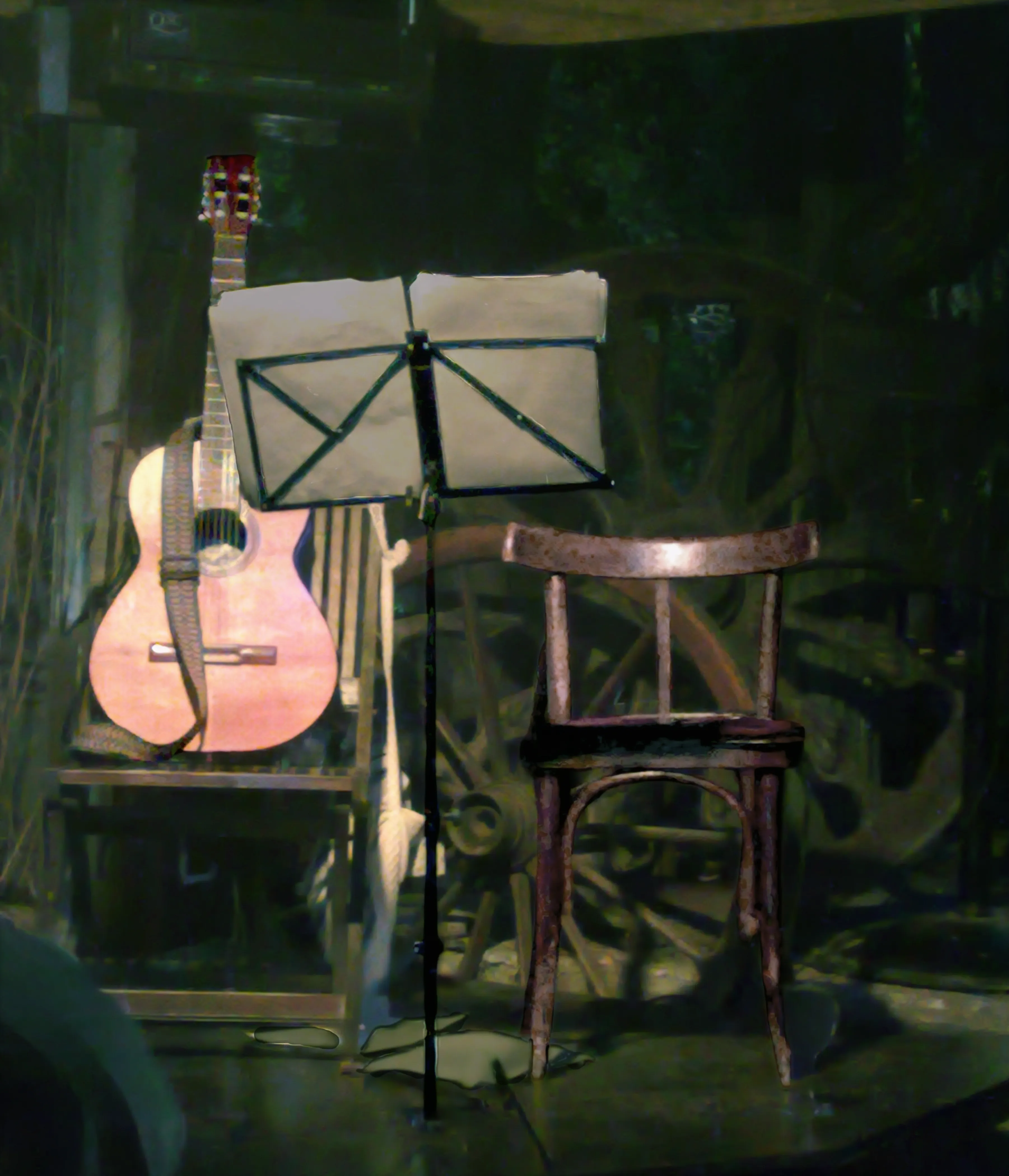
The Music Awaiting
FCS-PH-0017
Permanent Collection
Outside a restaurant in Recoleta, Buenos Aires, Argentina
About the Work
An unattended guitar, music stand, and empty chairs preserve the quiet interval between performances. The photograph reflects on friendship, memory, and the way music remains present even after the musicians step away.
The Artist
This photograph was taken outside a restaurant in the Recoleta neighborhood of Buenos Aires.
The guitarist and singer had become friends of mine over time. Whenever I visited, I would often stop to listen as they performed samba for people passing through the neighborhood.
On this particular day, I had been recording one of their performances.
During a short break, they stepped away, leaving behind the guitar, chairs, and music stand.
Most people might have waited for them to return.
I did not.
The moment already felt complete.
Looking at the empty chair, I could still hear their voices. I could hear their conversation between songs, the sound of the guitar, and the rhythm that had filled the street moments earlier.
Looking back, I realize I was not photographing silent instruments.
I was photographing a place where music had just been—and where I knew it would soon return.
The Curator
Music does not begin with the first note, nor does it end with the last.
The Music Awaiting explores the interval between performances, when the presence of the musicians remains even in their absence.
The empty chair, resting guitar, and waiting music stand become evidence that creativity has paused rather than disappeared.
The photograph reminds us that certain spaces continue to resonate long after performers have stepped away.
Curatorially, The Music Awaiting is strongest when read through the distance between an event and its later remembrance. The composition does not require a dramatic event to justify its place in the collection; its meaning develops through relationships inside the frame—distance, scale, structure, atmosphere, and the distribution of visual weight. That restraint is important. It allows the photograph to carry the theme of memory through form as well as through biography, giving the work an independent visual life while remaining connected to the artist’s experience.
Story Behind the Photograph
This photograph was created in front of a restaurant in Recoleta, where two musicians regularly performed samba for anyone who chose to stop and listen.
Over time, the guitarist and singer became friends of the artist.
On this visit, he had recorded part of their performance before they paused for a break.
Instead of following them, he turned his attention toward what remained.
The guitar leaned quietly against its chair.
The music stand still held the songs.
The empty space seemed less like absence than a promise.
The musicians would return.
Even in silence, the artist could still hear them.
The photograph’s significance did not end when the shutter closed. What was encountered in Outside a restaurant in Recoleta later became part of a larger personal record, and the surviving frame now connects the circumstances of the exposure with the perspective gained afterward. That distinction matters: the image documents what was physically present, while the story records what the moment came to mean. Keeping those two forms of evidence together—without confusing one for the other—is central to the way this work is preserved.
Reflection
Silence is rarely empty.
Sometimes it is simply holding a place for what is about to return.
A chair remembers.
A guitar waits.
A familiar place continues humming with voices that have only stepped away.
The deepest memories are not always the ones we see.
Sometimes they are the ones we continue to hear long after the music has stopped.
The photograph ultimately raises a question about what the frame retains after lived detail begins to recede. A camera can hold the appearance of a moment, but it cannot hold the entire experience surrounding it. That limitation gives The Music Awaiting much of its power. What is absent is not a flaw to be repaired; it is the space in which memory continues to work. The image remains fixed while the person returning to it does not.
The Museum
Preserved as the seventeenth accessioned photograph in the Francisco Colón Studio Photography Wing, The Music Awaiting explores sound through visual absence.
The work preserves not only two musicians and their performances, but also the enduring memory of friendship, conversation, and music shared along a Buenos Aires street.
Within the Francisco Colón Studio Photography Wing, The Music Awaiting is retained as part of the photograph as evidence that memory changes while the recorded scene remains. Its importance is therefore not measured only by subject matter or visual appeal. The work helps establish a recurring Studio principle: personal history can be preserved with emotional depth while the archive remains disciplined about the difference between what the photograph shows, what the artist remembers, and what later interpretation can responsibly infer.
Technical Information
- Location
- Outside a restaurant in Recoleta, Buenos Aires, Argentina
- Metadata Status
- Location, performers' relationship to the artist, and provenance preserved. Exact capture date, camera, and lens information require verification from the original file.
- Supporting Documentation
- Original source photograph, related performance recording, and artist provenance narrative preserved in the Francisco Colón Studio archive.
Collection Record
- Accession Number
- FCS-PH-0017
- Exhibit Number
- 17
- Exhibition
- People
- Status
- Permanent Collection
- Studio Acquisition
- Francisco Colón Studio Photography Wing
- Artist
- Francisco Colón
- Copyright
- © Francisco Colón. All Rights Reserved.