FCS-PH-0063
Photography Wing · Exhibit No. 63
Where the Wall Opens
Within a weathered wall overlooking the sea, two people create a quiet space of their own.
Where the Wall Opens
FCS-PH-0063
Permanent Collection
Historic waterfront wall, Cartagena, Colombia; precise location unconfirmed
Thursday, November 12, 2015
About the Work
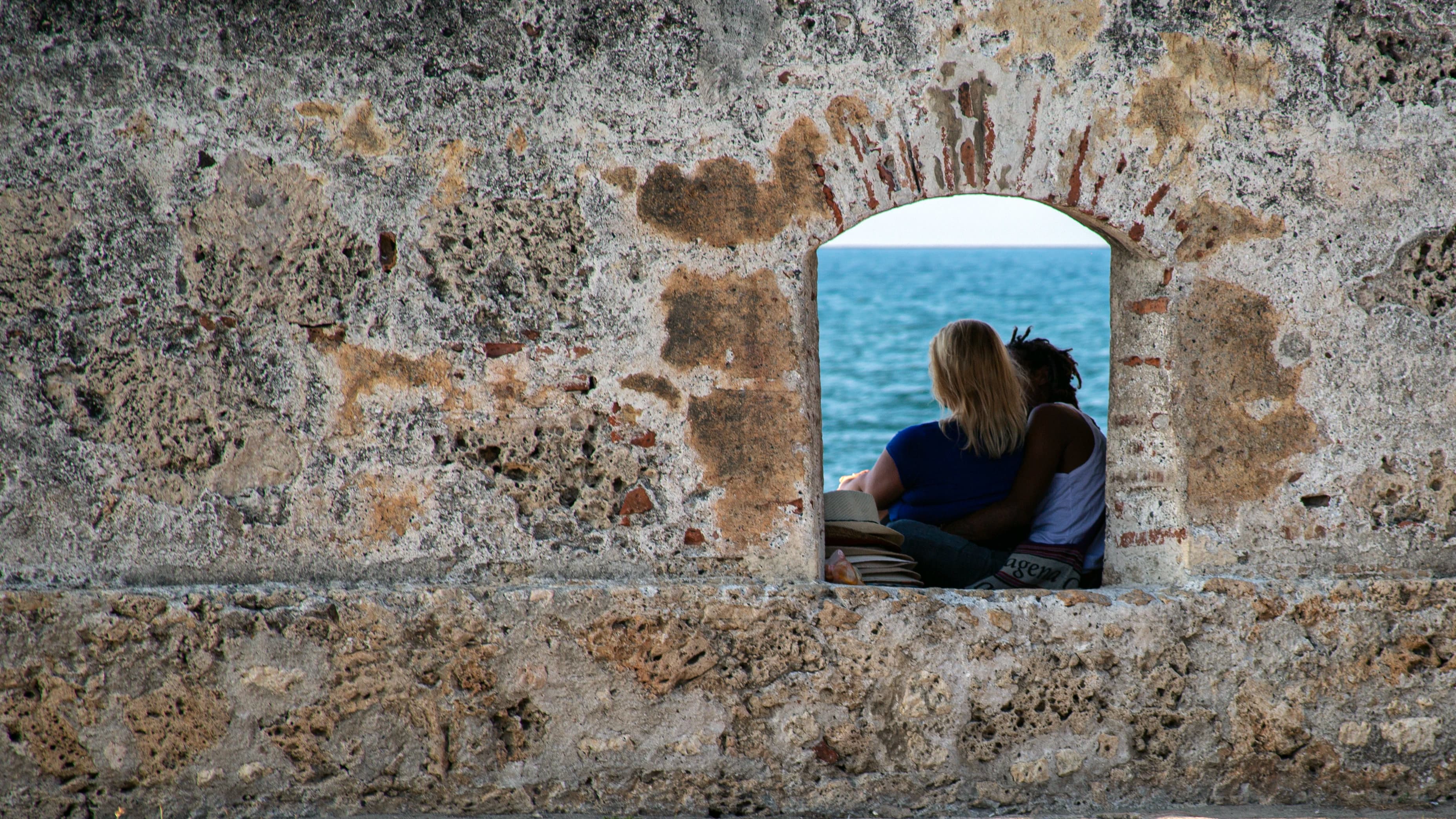
Two people share a quiet embrace within a small opening in a weathered stone wall overlooking the sea in Cartagena, Colombia. Surrounded by the scale and texture of the historic architecture, their intimate connection appears momentarily sheltered from the world around them. The opening creates a natural frame, transforming a fleeting human gesture into the emotional center of the composition.
The Artist
I noticed two people sitting together within a small opening in a weathered stone wall.
The wall occupied nearly everything around them.
Its surface carried layers of age, erosion, exposed stone, and traces of brick. Against that immense architectural presence, the two figures appeared small and temporarily sheltered.
They were turned away from me and looking toward the sea.
One rested against the other, creating a gesture of closeness that seemed completely separate from the public space surrounding them.
I did not need to approach.
The opening had already created the composition for me.
It framed the two people naturally while preserving the distance between the private moment they shared and the position from which I observed them.
What drew me was not simply the embrace.
It was the contrast between the endurance of the wall and the fragility of the moment taking place within it.
The stone had survived years of weather and history.
Their gesture may have lasted only seconds.
The photograph allowed both forms of time to exist together.
The Curator
Curatorially, Where the Wall Opens is strongest when read through relationships created by proximity, gesture, and shared space. The composition does not require a dramatic event to justify its place in the collection; its meaning develops through relationships inside the frame—distance, scale, structure, atmosphere, and the distribution of visual weight. That restraint is important. It allows the photograph to carry the theme of connection through form as well as through biography, giving the work an independent visual life while remaining connected to the artist’s experience.
Story Behind the Photograph
On November 12, 2015, Francisco Colón was photographing in Cartagena, Colombia, during a business trip.
While moving through the historic waterfront environment, he encountered a large weathered wall containing a small arched opening toward the sea.
Two people were seated inside the opening.
They faced away from the photographer and toward the water. One leaned against the other as they occupied the confined architectural space together.
From Colón's position, the wall dominated the scene.
Its rough surface, exposed stone, worn plaster, and remnants of brick communicated age and endurance. The people, by contrast, appeared small and momentary.
The arched opening became a frame within the photograph.
It separated the figures from the surrounding wall while revealing the blue water beyond them. The architecture did not merely provide a background; it enclosed and protected the human gesture at the center of the image.
Colón photographed the scene without approaching or interrupting it.
The physical distance preserved the subjects' unguarded posture and allowed the photograph to retain the quality of quiet observation.
In the finished composition, the broad wall extends across the frame while the opening rests away from the center.
The surrounding negative space establishes scale and directs attention toward the two people without allowing them to overwhelm the architecture.
Where the Wall Opens records a brief convergence of human connection, historic structure, and the sea.
The identities of the subjects remain unknown.
What remains visible is the closeness they shared and the small refuge they created within a much older place.
Reflection
The wall was larger than the moment.
It surrounded the two people with years of weather, history, and physical endurance.
They occupied only a small opening within it.
From where I stood, I could not know who they were, what they were discussing, or how long they had been sitting there.
I could only see the way one person leaned toward the other and how naturally they appeared to fit within the opening.
The sea continued beyond them.
The wall remained around them.
For a brief moment, they seemed to belong to neither.
They had created a private space inside a public and historic place.
I chose to preserve the distance.
Moving closer might have provided more detail, but it could also have disturbed the gesture that made the photograph meaningful.
Their anonymity allows the image to remain open.
The photograph is not dependent upon knowing their story.
It is enough to recognize the connection.
The wall opens physically toward the sea, but it also opens emotionally.
Within all that stone, it reveals something human.
The Museum
Preserved as the sixty-third accessioned photograph in the Francisco Colón Studio Photography Wing, Where the Wall Opens joins the People collection as a study of connection, observation, architecture, and time.
The photograph was created in Cartagena, Colombia, during November 2015.
Two unidentified people are seated within an arched opening in a historic waterfront wall. They face the sea with their backs turned toward the photographer, preserving both their anonymity and the unguarded nature of the moment.
The architectural setting has not been attributed to a specific monument or section of Cartagena's fortifications because the precise location has not yet been independently confirmed.
The composition relies upon a frame within a frame.
The arched opening isolates the figures from the surrounding stone while simultaneously connecting them to the water beyond the wall.
The broad expanse of weathered architecture establishes scale and visual duration. Its worn surfaces suggest the accumulation of history, while the human gesture contained within it appears temporary and immediate.
Colón photographed the subjects from a respectful distance without interrupting their interaction.
The final panoramic crop reduces the foreground and removes peripheral distractions while retaining the wall's monumental scale and the subjects' relatively small presence within it.
The work was revisited and edited in 2026. The restoration emphasized tonal separation, architectural texture, and the visibility of the figures while preserving the natural distance and anonymity of the original observation.
Within the Studio archive, Where the Wall Opens demonstrates how architecture can serve as both physical structure and emotional enclosure.
The photograph does not document the identities of the people depicted.
It preserves the visible evidence of connection they created within a fleeting moment.
Technical Information
- Camera
- Canon EOS 5D Mark III
- Lens
- Canon EF 28–135mm f/3.5–5.6 IS USM
- Focal Length
- Pending confirmation from original EXIF metadata
- Capture Date
- Thursday, November 12, 2015
- Capture Time
- Pending confirmation from original EXIF metadata
- Location
- Historic waterfront wall, Cartagena, Colombia; precise location unconfirmed
- Route
- Photographed while exploring Cartagena during a November 2015 business trip
- Flash
- Pending confirmation from original EXIF metadata
- White Balance
- Pending confirmation from original EXIF metadata
- Metadata Status
- The original Canon RAW file remains preserved in the Studio archive. The Canon EOS 5D Mark III and Canon EF 28–135mm f/3.5–5.6 IS USM lens are associated with the surviving image sequence. Exact focal length, ISO, exposure settings, capture time, flash status, and white balance remain to be transcribed directly from this photograph's EXIF panel.
- Supporting Documentation
- Original Canon RAW file, surrounding image sequence, surviving EXIF metadata, 2026 edited master, and artist provenance narrative preserved in the Francisco Colón Studio archive.
Collection Record
- Accession Number
- FCS-PH-0063
- Exhibit Number
- 63
- Exhibition
- People
- Status
- Permanent Collection
- Original Capture
- November 12, 2015
- Studio Acquisition
- Francisco Colón Studio Photography Wing
- Artist
- Francisco Colón
- Copyright
- © Francisco Colón. All Rights Reserved.